Every small business owner knows the quiet frustration of watching a card payment settle, minus the 2.5% the processor quietly skimmed off the top. Multiply that across hundreds of transactions, and you’re not looking at a rounding error. You’re looking at a meaningful chunk of your margin. That’s exactly why pay-by-bank is gaining serious traction among small businesses that are done leaving money on the table.
This article breaks down when pay-by-bank makes sense, when cards still win, and how to think about the choice for your specific business model.
What Is Pay-by-Bank?
Pay-by-bank—also called account-to-account (A2A) payments—lets customers pay directly from their bank account to yours. There’s no card network in the middle. No Visa. No Mastercard. No processor is taking a slice.
Card details may also be skipped by the customer at checkout and authorize the payment through their banking app. Payments are exchanged between accounts in the U.S. via ACH or via the faster RTP payment rail, FedNow. Customers may expect cheaper, easier, and cleaner transactions through faster rails.
A2A payments aren’t new. Wire transfers and ACH have existed for decades. What’s changed is the user experience. Open banking infrastructure and modern fintech have made pay-by-bank something a customer can actually complete in a few taps—no routing numbers, no paperwork.
The Real Cost of Card Payments for Small Businesses
Credit card transactions for small businesses can range from 1.5% to 3.5% of the purchase amount. These percentages can vary by card type, processing vendor, and whether the card was present during the transaction. Although debit card transactions can be cheaper, they still cost merchants due to interchange fees. Of all the cards, the Premium rewards cards are the ones merchants love the least, as they tend to cost the merchants the most.
Then there are the fixed fees. Monthly gateway fees. PCI compliance fees. Chargeback fees. Statement fees. These costs are often buried in fine print, but they compound quickly for a small operation running on tight margins.
According to the Federal Reserve, US businesses paid over $100 billion in card acceptance costs in a recent year. For a small business doing $500,000 in annual card revenue at an average 2.5% rate, that’s $12,500 per year going straight to the payment ecosystem rather than to growth, payroll, or inventory.
Where Pay-by-Bank Has a Clear Advantage

Lower Transaction Costs
This is the headline benefit. Pay-by-bank transactions typically cost between $0.20 and $1.50 flat, regardless of transaction size. For businesses with high average order values—contractors, B2B service providers, wholesale suppliers—the math is stark. A $5,000 invoice paid by credit card costs the business $125 in fees at 2.5%. The same invoice paid via A2A payments might cost $1.
Faster Access to Funds
A typical card payment clears within one or two business days, and oftentimes may take even longer. Now that RTP (Real-Time Payments) and FedNow infrastructure exist, payments made by bank transfer can clear within seconds. For small businesses that have to plan cash flows on a week-to-week basis, speed in payment processing is lifesaving.
Reduced Chargeback Risk
Chargebacks are one of the most painful aspects of accepting cards. A customer disputes a charge, the card network sides with them by default, and the merchant is out both the product and the money, plus a chargeback fee. Pay-by-bank transfers don’t carry the same dispute mechanism. Once authorized, the payment is considerably harder to reverse, which dramatically reduces fraud-related losses for merchants.
Cleaner Reconciliation
Payment data from bank transfers arrives with a clear transaction structure, making reconciliation easier. QuickBooks and Xero are accounting software packages that business owners can subscribe to. If businesses incorporate these software packages, they can easily structure, organize, and reconcile A2A payments. Card payments require more manual work because they arrive in aggregated batches.
When Cards Still Make More Sense
Consumer retail with impulse buying is still dominated by cards. When someone walks into a coffee shop or a boutique, they’re not going to authorize a bank transfer at the counter. Cards—especially tap-to-pay—are fast, familiar, and expected. Forcing a pay-by-bank flow on a walk-in customer creates friction and risks losing the sale.
A2A faces several challenges with international payments. Cross-border bank transfers involve currency conversion, correspondent banking fees, and slow transfer systems. Cards can handle multiple currencies and transactions far more easily for the final customer. If your small business sells to international customers, cards are the more sensible option for the time being, though cross-border A2A systems are improving.
Credit card user rewards and loyalty programs are part of card networks. Payment methods that offer points or cash back are preferred by many individuals. Eliminating cash-back rewards can increase friction, especially among higher-income customer segments. Some companies have offered small incentives to customers to reward them for paying by bank transfer instead of by card, somewhat equivalent to a cash reward, but it would still take effort for those companies to battle pay by bank options.
Chargeback protection cuts both ways. While merchants suffer from fraudulent chargebacks, legitimate customers appreciate the recourse. In B2C contexts where trust hasn’t been fully established, some customers feel safer using a card precisely because they know they can dispute a charge if something goes wrong.
The Small Business Payment Methods Decision Framework
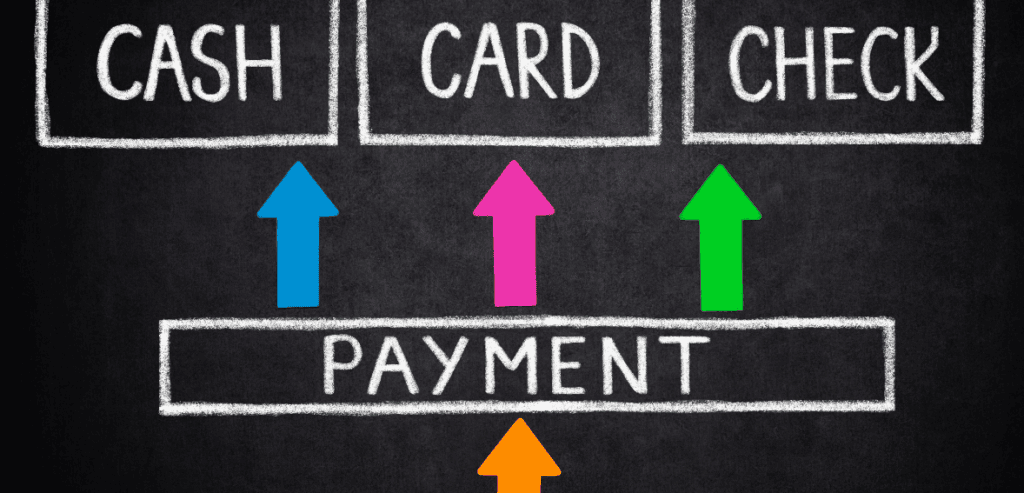
As a general rule, transactions are handled through bank payments for high-value business-to-business (B2B) invoices, recurring/scheduled billing cycles, or subscription payments with known customers. The lowest-priced consumer transactions, in-person retail and international commerce, favor credit card payments. When customers are required to make payments online, and the business has a prior association with them, offering bank payments in addition to credit card payments improves the business’s ability to convert customers facing a wallet constraint and reduces payment processing costs.
The key insight is that small business payment methods don’t need to be uniform. A freelance designer invoicing corporate clients has very different needs than a bakery serving walk-in customers. The optimal payment stack reflects the transaction profile, not a one-size-fits-all default.
Platforms and Tools Supporting Pay-by-Bank
Stripe
Stripe has developed its pay-by-bank service across several markets. In ACH direct debit, available for US services, customers may pay recurring charges via a direct debit. Furthermore, through its open banking services, Stripe customers can quickly verify their bank accounts. In other services, Stripe offers common APIs for card and bank payment methods, allowing customers to integrate both via a single integration.
Plaid
Plaid has become foundational infrastructure for A2A payments in the US. It connects applications to bank accounts through a secure, permissioned flow that handles account verification, balance checks, and identity confirmation in seconds. Many pay-by-bank solutions for small businesses are built on top of Plaid’s network, which now covers the vast majority of US bank accounts.
Melio
Bill pay and B2B payments are in Melio’s DNA. Melio’s interface, designed for people who aren’t in finance, makes paying vendors and receiving payments via ACH bank transfer simple. Melio streamlines cumbersome B2B banking for small businesses with accounts payable and accounts receivable.
What Open Banking Means for the Future of A2A Payments
The US is changing regulations in Favor of open banking. The Consumer Financial Protection Bureau (CFPB) has been developing frameworks that require banks, in a safe, standardized manner, to permit clients to share their financial information with third parties. This basic infrastructure, often referred to as Section 1033 data rights, is essential to the scale of pay-by-bank in the US banking ecosystem.
As these rails mature, the friction that has historically held back A2A payments in the US consumer market will erode. Expect pay-by-bank to become a standard option at checkout across more verticals over the next three to five years.
Conclusion
Pay-by-bank isn’t a replacement for cards—it’s a smarter tool for specific jobs. For small businesses handling large invoices, recurring billing, or B2B transactions, A2A payments offer a genuinely compelling alternative: lower fees, faster settlement, and less chargeback exposure. For consumer-facing retail where speed and familiarity drive conversion, cards remain hard to beat.
The businesses that will benefit most are those willing to look honestly at their transaction mix, run the fee math, and build a payment stack that reflects their actual needs rather than defaulting to whatever the biggest processor makes easy. In a margin-sensitive environment, the difference between a 2.5% card fee and a $0.50 flat bank transfer fee isn’t trivial. Over time, it’s transformative.
Frequently Asked Questions
Is pay-by-bank safe for small businesses?
Pay-by-bank transactions use bank-level encryption and require explicit customer authorization through their own banking credentials. For merchants, the reduced chargeback risk actually makes A2A payments more secure than card acceptance in many B2B contexts. The main risk—ACH return fraud—can be mitigated through account verification tools like those offered by Plaid.
How long does a pay-by-bank transfer take to settle?
It depends on the payment rail. Standard ACH transfers typically settle in one to two business days, with same-day ACH available for an additional fee. Transactions routed through RTP or FedNow settle in seconds. Most small businesses’ pay-by-bank solutions default to same-day or next-day settlement.
Can I offer pay-by-bank alongside cards at checkout?
Absolutely, and this is the recommended approach for most small businesses. Platforms like Stripe let you present both options in the same checkout flow. Offering pay-by-bank as a choice—rather than a mandate—lets customers self-select based on their preference while giving cost-conscious buyers a frictionless alternative.
Do customers actually use pay-by-bank?
Adoption varies by context. In B2B settings, bank transfers have always been common—many business customers prefer them. In consumer-facing contexts, adoption is growing but still trails cards. Offering a small incentive (such as a discount or a fee waiver) for choosing pay-by-bank can meaningfully increase uptake without cannibalizing card revenue.